Forms / Sets – 套拳
The Structured Path of Skill Development in Ng Ga Kuen
In traditional Chinese Kung Fu, forms (sets) are the core method for developing skill, structure, and understanding of a system. Each form teaches coordination, breath control, intention, and the ability to generate and release power. More importantly, forms preserve the identity and lineage of a style — they express its philosophy, movement logic, and combat strategy.
Students begin by learning preset routines. As skill deepens, the practitioner learns to break down each movement, understand its standard application, and eventually recombine techniques freely while still maintaining the essence of the system. The ultimate goal is not simply to perform a form, but to embody it — moving with adaptability, clarity, and integrity.
Training Progression in Ng Ga Kuen
Ng Ga Kuen organizes its curriculum into three levels, each building on the last:
Beginner Level
- Establishes foundational stances and basic movements
- Builds coordination, balance, and breath awareness
- Introduces the structure and rhythm of traditional hand forms
Intermediate Level
- Adds complexity through transitional movements
- Begins weapon training
- Expands technical variety and mobility
Advanced Level
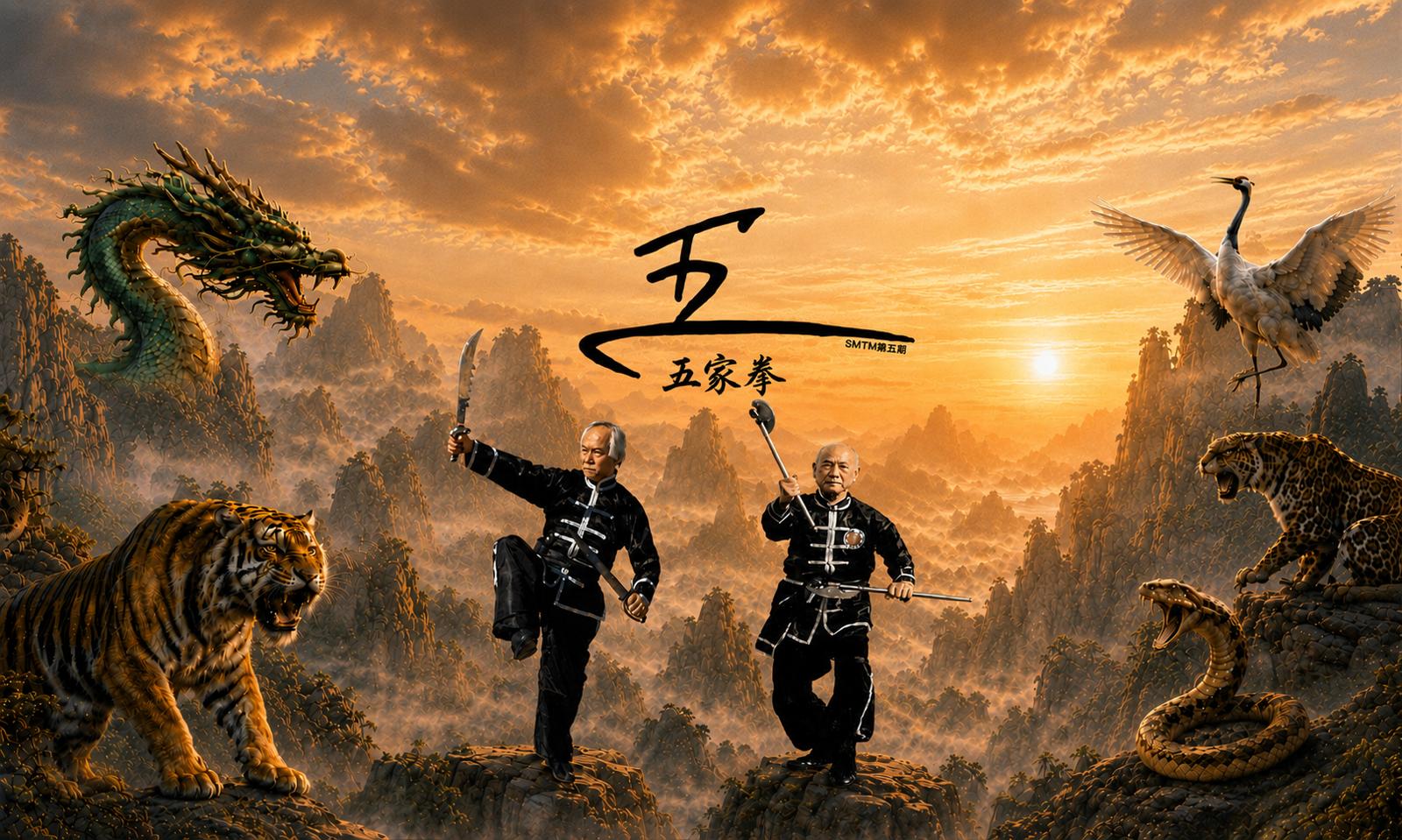
- Integrates the physical and spiritual qualities of the Five Animals
- Dragon • Snake • Tiger • Leopard • Crane
- Includes advanced weapons and two‑person fighting sets
- Trains real‑time awareness, reflex, timing, and adaptability
Weapons in Ng Ga Kuen
Weapons are introduced at the intermediate level and categorized by range and nature:
By Range
- Short‑range: Daggers, Butterfly Knives
- Medium‑range: Broadsword, Nine‑Ring Knife
- Long‑range: Spear, Quan‑Do
By Nature
- Soft (flexible): Steel Whip Chain
- Hard (rigid): Tiger Fork
A signature weapon of the system is the Three‑Sectional Staff, notable for its versatility. It can function as:
- Soft or hard
- Short, medium, or long‑range
This makes it one of the most challenging and expressive weapons in the curriculum.
Two‑Person Fighting Sets
Two‑person sets train:
- Awareness
- Reflex
- Accuracy
- Timing
- Semi‑practical application of techniques
Advanced students also practice non‑scripted drills, developing spontaneous reaction and real‑time decision‑making — essential qualities for practical combat skill.
Foundational Forms / Sets
Hand Forms (拳)
Salute • Small Cross • Butterfly • Combination • Black Bird • Palm • Dragon • Snake • Tiger • Leopard • Crane • Advanced Animal Forms
Weapon Forms (兵器)
Butterfly Knife • Broadsword • Short Stick • Double‑Head Stick • Spear • Three‑Sectional Staff • Double‑Edge Sword • Quan‑Do • Additional Weapons
Two‑Person Hand Fighting Sets (對拆套拳)
Beginner • Intermediate • Advanced
Two‑Person Weapon Fighting Sets (兵器對拆套拳)
Double‑Head Stick vs Double‑Head Stick • Spear vs Broadsword • Spear vs Three‑Sectional Staff • Additional Weapon Sets

