⭐ MARTIAL VIRTUES (武德 / Mou Dak)
Universal Principles of Morality in Traditional Shaolin Martial Arts
Traditional Chinese martial arts — especially those descended from the Shaolin Temples — have always emphasized a moral code known as Wude (武德) in Mandarin and Mou Dak (武德) in Cantonese. In classical training, martial morality was considered the most important criterion for judging a student, even more important than physical skill.
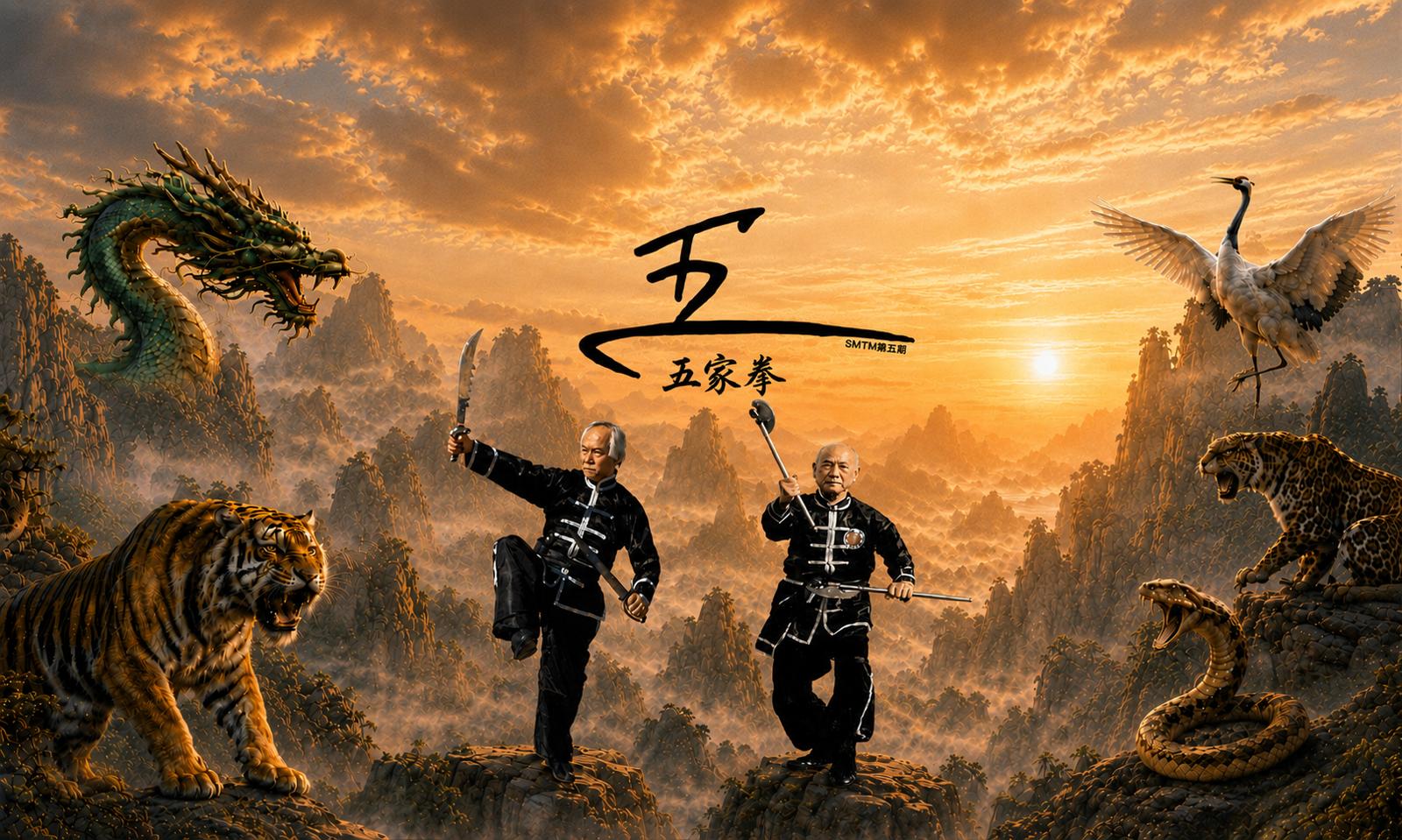
In the Ng Ga Kuen (Five‑Family) system, Wude is not simply taught —
⭐ it is lived.
It is woven into how the art is transmitted, practiced, and preserved.
Wude is divided into two major categories:
- Morality of Deed (外德) — how you conduct yourself toward others
- Morality of Mind (內德) — how you cultivate your inner self
Both are essential for becoming a complete martial artist.
⭐ 1. Morality of Deed (外德)
How you relate to your martial family and the world
This category governs your relationships with:
- Your teacher (Sifu)
- Senior classmates (Sihing / Sije)
- Junior classmates (Sidai / Simui)
- The lineage
- The broader community
These virtues mirror the natural relationships found within one’s own family. Ng Ga Kuen aims to strengthen these qualities so they become part of your character in all aspects of life.
Humility (謙遜)
Humility is the balance between confidence and ego. It is the ability to remain grounded while demonstrating strength and courage.
A humble person:
- Controls pride
- Remains open to learning
- Prioritizes growth over self‑importance
Confucius taught:
“If three people walk by, one of them can be my teacher.”
There is always someone who knows more in some area.
Respect (尊重)
Respect is expressed through care, courtesy, and proper conduct:
- Bowing
- Greeting
- Thanking
- Addressing others correctly (Sifu, Sisuk, Sihing, etc.)
Respect includes filial piety, honoring elders, ancestors, and lineage.
“If you cannot respect yourself, how can you respect others?”
Righteousness (義)
Righteousness means doing what is morally correct and taking responsibility for your actions. It reflects a mind guided by wisdom rather than emotion, earning trust through integrity.
Trust (相信)
Trust develops over time through honesty, fairness, and fulfilling promises. True trust exists when there is no reservation or doubt. It is the cornerstone of friendship and respect.
Loyalty (忠誠)
Loyalty grows from trust. It is demonstrated through commitment, faithfulness, and fulfilling obligations — especially between student and master.
Filial Piety (孝)
In martial arts, filial piety extends beyond blood family to include:
- Teachers
- Senior students
- Ancestors of the style
It is not transactional — the obligation exists simply because the teacher gave. It is expressed through humility, ego control, sincerity, discipline, and loyalty to the lineage.
⭐ 2. Morality of Mind (內德)
How you cultivate inner harmony and balance
This category focuses on balancing the wisdom mind and the emotional mind, following the Taoist principle of Yin and Yang. These virtues shape the inner strength required to become a true martial artist.
Will (意志)
Willpower emerges from sincere commitment to one’s goals. It is the ability to control impulses and maintain focus.
Perseverance (毅力)
The determination to stay on a chosen path. Perseverance is the outward expression of strong will.
Persistence (堅持)
The ability to endure hardship and continue forward. Persistence is essential for long‑term growth.
Patience (耐心)
Patience is learned through repetition and refinement. Practicing a form many times reveals deeper understanding and multiple applications.
Courage (勇氣)
Courage arises from wisdom, not recklessness. It is the willingness to face pain, danger, uncertainty, or intimidation with clarity and strength.
Without wisdom, bravery becomes blind.
Filial Piety (孝)
As a mental virtue, filial piety means honoring the sacred bond of transmission, preserving the integrity of the art, and cultivating gratitude. It is a living expression of Wude.
⭐ Why Martial Virtue Matters
These virtues shape a martial artist’s:
- Character
- Behavior
- Training
- Relationships
- Approach to life
Traditional martial arts emphasize moral cultivation and lineage preservation, while modern systems often focus on performance, fitness, or competition.
Ng Ga Kuen seeks to transform the Mind, Body, and Emotional Spirit so practitioners embody these virtues throughout their life journey.
⭐ Wude (武德) and Daode (道德)
Wude and Daode are inseparable.
- Daode is the foundation of personal and social morality.
- Wude is Daode applied within martial arts.
A martial artist without moral grounding risks being led astray by ego or selfish intent.
“Cultivate virtue before skill.”
This principle lies at the heart of traditional practice. Seeking skill without virtue betrays the art and can harm others.

